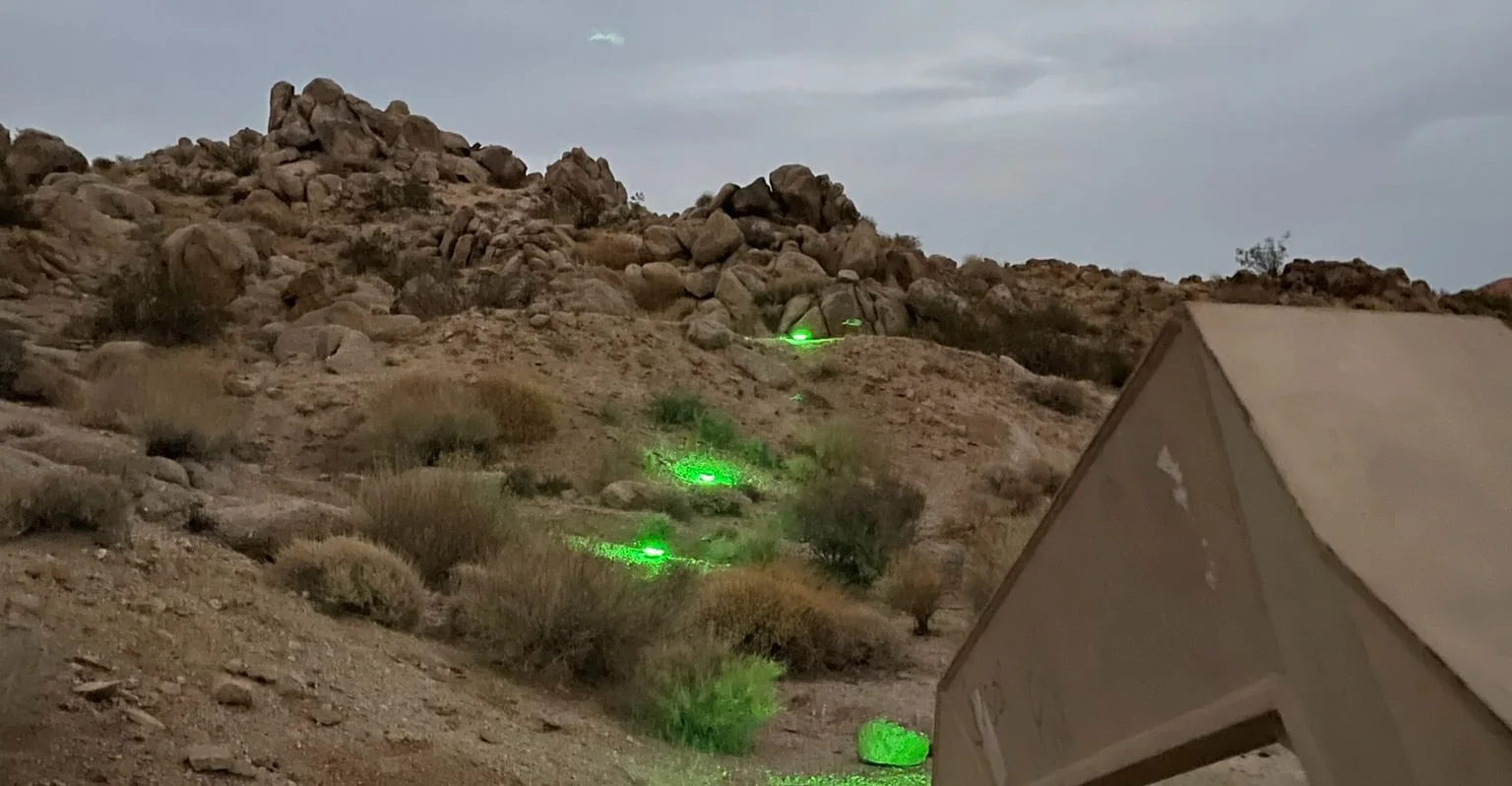
Built with the Soldiers who own the problem.
Exposure at the breach is a survivability problem, not a marking problem.
Manual lane marking exposes combat engineers at the point of greatest risk. Poor lane visibility then slows the formation, causes vehicles to bunch, and puts additional combat power at risk.
BreachON is designed to reduce unnecessary exposure, accelerate passage, and enable more precise maneuver through the breach.
Direct interviews across engineer, assault and staff roles. Every design decision on the current build traces back to a specific conversation with someone who has run a breach.
Successive hardware builds against Soldier feedback, each one narrowing the gap between what was buildable and what was actually wanted.
Per DIU OnRamp Hub. Multi-spectral output and TAK visualization demonstrated in Army field experimentation.
Ruggedized thermal, 24–72 hour endurance, RF hardening, and integration into operational TAK environments.
Prototype procurement
Unit purchases for operational evaluation with engineer formations.
Platform integration
Vehicle and autonomous-platform integration for mounted and robotic deployment.
Army testing
Testing and requirements development against the lane marking gap.
Transition
Alignment with relevant PM/PEO organizations.
Field first, always.
No feature ships because it demos well. Every capability on the current build survived contact with Soldiers who would have to carry it, emplace it under time pressure, and trust it at night.
Attritable by design.
A marker left in a contested lane is not coming back. Cost, replaceability, and production scale are treated as requirements, not afterthoughts. The system has to be affordable enough to leave behind.
Fit the existing fight.
Engineers already carry too much. BreachON is built to work with the optics, networks, and TAK workflows formations use today rather than asking them to adopt a new one.
Built with the engineers who run the breach.
BreachON started inside Hacking for Defense (H4D) after direct customer discovery with combat engineer formations revealed a persistent, unsolved gap: lane marking remains manual, slow, and dangerous in contested environments.
The team brings together software engineers, veterans with combat arms backgrounds, and defense acquisition experience. Every build decision traces back to a specific conversation with someone who has run a breach.
contact@breachon.usCustomer discovery through Hacking for Defense with engineer, assault, and staff formations across multiple installations.
Selected for the Defense Innovation Unit Commercialization Fellowship, Summer 2026 cohort. Supported by the Army Applications Lab and Common Mission Project through prototype development and field evaluation.
Third hardware iteration demonstrated at NTC and Fort Hood. Advancing development toward broader Army field evaluation and program transition.